The simple money habits that stick are small, automatic and easy to repeat: pay yourself first, check your accounts on a set day each week, give every dollar a job, and review your credit once in a while. You don’t need a perfect budget or a big income to start. You need a few routines that run even on the weeks you feel too busy to think about money.
This guide from FMBanksia.com walks through the habits that tend to last, why they work, and how to build them without turning your life upside down.
Key takeaways
- Habits beat willpower. Automate the important moves so they happen without a decision.
- Start tiny. A $10 transfer you never skip is worth more than a $200 plan you abandon.
- A short weekly money check-in catches fees, errors and fraud early.
- Give every dollar a job, even if that job is “flexible spending.”
- Review your credit reports and big bills on a calendar, not only when something goes wrong.
Why simple money habits work better than big plans
Most people don’t struggle with money because they lack information. They struggle because good intentions fade when life gets loud. A habit takes the decision out of the moment, so the right thing happens by default.
Big overhauls often fail for the same reason crash diets do. Small habits compound quietly, and once one sticks, the next one is easier to add.
The habit loop, applied to money
A habit usually has three parts: a cue, a routine and a reward. For money, the cue might be payday or Sunday morning coffee. The routine is the action, like moving money to savings. The reward can be as simple as watching a balance grow or crossing off a task.
Seven simple money habits worth building
1. Pay yourself first, automatically
Set up a recurring transfer from checking to savings that runs on payday. The Consumer Financial Protection Bureau’s guide to building an emergency fund describes automatic saving as one of the easiest ways to stay consistent. It also notes that some employers let you split direct deposit between checking and savings.
Start with an amount small enough that you won’t notice it. You can raise it later. If you are starting from zero, our walkthrough on how to build an emergency fund covers how much to aim for and where to keep it.
2. Hold a weekly money check-in
Pick one day and spend ten to fifteen minutes looking at your accounts. Scan for transactions you don’t recognize, upcoming bills and anything that looks off. This habit catches problems while they are still small.
It is also a good moment to spot recurring charges you forgot about, such as subscriptions or account fees. Our list of checking account fees to avoid shows which ones are worth questioning.
3. Give every dollar a job
Before the month starts, decide roughly where your income will go: bills, groceries, savings, debt and fun money. This doesn’t need to be precise. The goal is to make choices on purpose instead of discovering at month’s end where the money went.
If you want a ready-made framework, the 50/30/20 budget rule splits take-home pay into needs, wants and savings. It is a reasonable starting point that you can adjust.
4. Use a 24-hour pause for non-essential buys
When you want something that isn’t a need, wait a day before buying it. Many impulse purchases lose their appeal overnight.
5. Pay bills on autopilot, but watch them
Autopay helps you avoid late fees, but it shouldn’t mean ignoring your bills. Keep autopay for fixed amounts, and look over variable bills like utilities and credit cards during your weekly check-in. Make sure your checking balance can cover each payment so you don’t trade a late fee for an overdraft fee.
6. Check your credit reports on a schedule
According to the Federal Trade Commission’s page on free credit reports, you can check your report from each of the three nationwide credit bureaus for free every week through AnnualCreditReport.com. The FTC warns about imitation sites, so type that address directly. Reviewing your reports a few times a year helps you spot errors or accounts you didn’t open.
7. Hold a short monthly money date
Once a month, look at the bigger picture. Did your savings grow? Did any category run over? Is there a bill you could lower?
A sample habit schedule
Here is one way to spread these habits across the calendar so none of them feels heavy. Adjust the timing to fit your pay schedule.
| Frequency | Habit | Time needed |
|---|---|---|
| Every payday | Automatic transfer to savings | None after setup |
| Weekly | Scan accounts, review upcoming bills | 10–15 minutes |
| Before each non-essential buy | 24-hour pause | A moment of thought |
| Monthly | Money date: review spending and goals | About 30 minutes |
| A few times a year | Check credit reports, renegotiate or cancel bills | About an hour |
How to make a new money habit stick
Keeping it going for months is where most plans stall. A few practical tactics help:
- Make it smaller than you think it should be. A habit you can do on your worst week is one you’ll keep.
- Remove friction. Automate transfers, save your login, set a recurring calendar reminder.
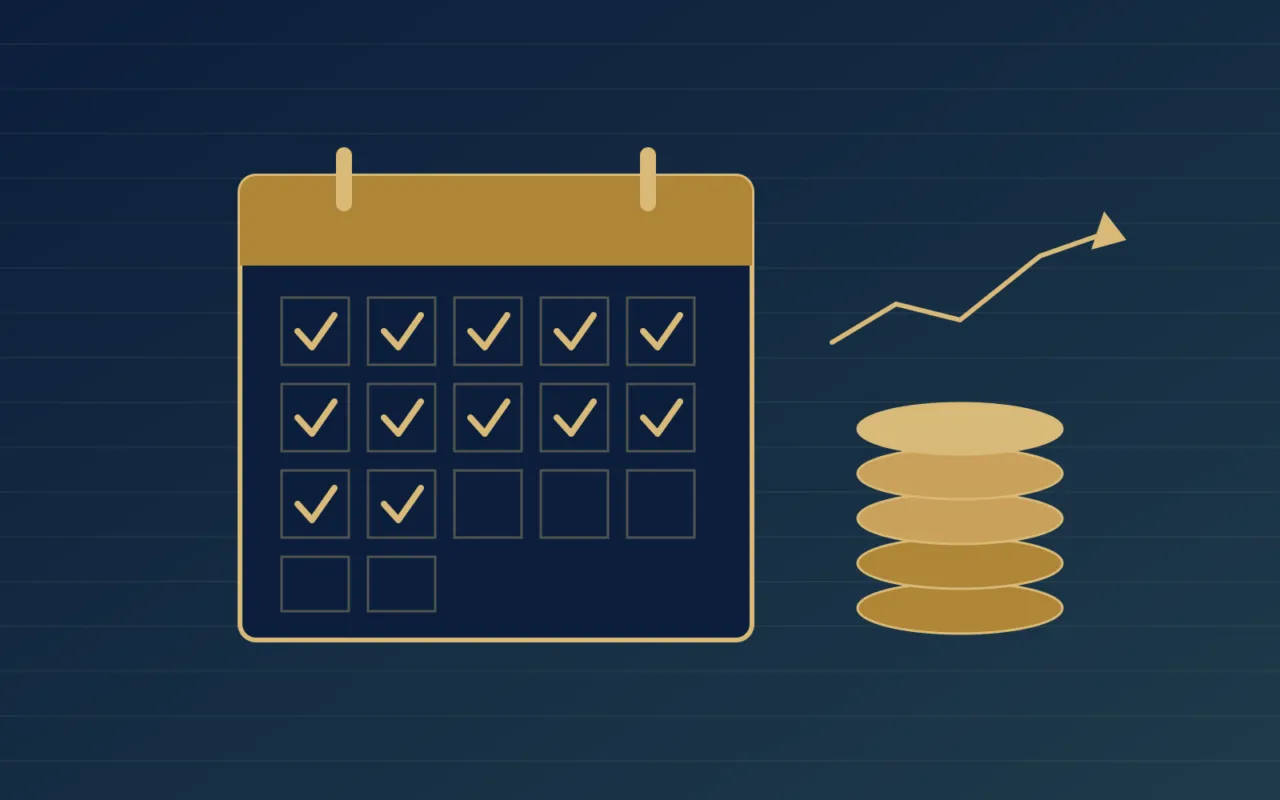
- Track streaks. A simple checkmark on a calendar can be surprisingly motivating.
- Plan for misses. If you skip a week, just pick it back up. One miss doesn’t break a habit; quitting does.
- Add one habit at a time. Stack the next habit only after the current one feels automatic.
A hypothetical example
Say you start by moving $25 to savings every two weeks. That works out to $650 over a year, before any interest. After three months, you raise it to $40 per paycheck, which would add up to $1,040 over a full year. Neither amount is dramatic, but the habit is doing the work, not your willpower.
Where you park that money matters too. Some savings accounts pay more interest than others, and our explainer on high-yield savings accounts covers what to compare.
This article is general education, not personalized financial advice. Your situation, income and goals are your own, so adapt these ideas to fit them.
Where to go from here
Pick the one habit that feels easiest and start it this week. Once it runs on its own, add the next. For broader topics like budgeting, debt and saving, browse the Personal Finance section, or keep exploring practical pieces in the FMBanksia.com blog.
Habits are personal, and what works for one household may not work for another. Experiment, keep what helps and drop what doesn’t.
For more calm, practical reading, you can always return to the plain-English money guides at FMBanksia.com.
Frequently asked questions
What is the easiest money habit to start with?
For most people, an automatic transfer to savings on payday is the easiest place to start. You set it up once, and it runs without any further decisions. Begin with a small amount you won’t miss, then increase it gradually as the habit becomes normal and your budget allows.
How long does it take for a money habit to stick?
There is no fixed timeline, and it varies from person to person and habit to habit. Simple, automated habits can feel normal within a few weeks, while ones that need active effort may take months. Focus on consistency rather than a deadline, and restart quickly if you miss a week.
Do I need a strict budget to build good money habits?
No. A strict, line-by-line budget works for some people, but many do fine with a looser plan that simply assigns income to a few broad categories. The habit of deciding in advance where money goes matters more than the exact method. Choose a system simple enough to keep using.
How often should I check my bank accounts?
A weekly check-in of ten to fifteen minutes is a practical rhythm for most households. It is frequent enough to catch unfamiliar charges, upcoming bills and possible fraud early, but not so frequent that it feels like a chore. Many banks also offer balance and transaction alerts that help between check-ins.
This guide is for general education only and is not personalised financial, tax or legal advice. Consider speaking with a qualified professional about your situation. See our financial disclaimer.